.png)
Healthcare in the United States didn’t start with insurance cards and copays. It began with barter, community trust, and a few bold ideas that changed everything.

When we think about healthcare today, it’s easy to picture a maze of insurance plans, deductibles, and regulations. But rewind to the late 1700s, and the picture looks very different. Doctors were paid in goods, livestock, and favors. Public health was barely a concept. And yet, these humble beginnings laid the foundation for the complex system we navigate today.
the scene

Bartering for Care: Philadelphia, 1776
Imagine yourself in colonial Philadelphia. Lately you have been feeling unwell and have attempted home remedies over the past few days, but you can’t seem to shake your illness. You decide to visit a local doctor you have heard good things about — Dr. William Shippen Jr. You throw on your overcoat and walk down the cobblestone road in the direction of his office. While you travel you hear horses clip-clopping, the newsboy shouting today’s headlines and people bartering for goods. After a short walk, you arrive at his office and begin to detail your ailments with the doctor and what remedies you have tried so far. Dr. Shippen begins an examination and diagnoses you with Scarlet Fever (oh no!). The doctor asks you to wait while he grabs one of his new concoctions created specifically for Scarlet Fever and upon his return begins the discussion of how you will pay for services.
Fast forward to 1798. President John Adams signed the first federal public health law creating the Marine Hospital Service, and one of the earliest forms of a group coverage policy. For this to be funded, customs collected 20 cents a month from every arriving sailor’s wages and deposited the money to the Department of Treasury. Collections were used to treat sailor’s illnesses and fund hospital construction, a groundbreaking idea that hinted at social insurance and planted seeds for structured coverage (U.S. National Library of Medicine, 1998).
With America industrializing, the use of railways and steamboats increased as it was a way to more efficiently transport goods and people. With the increased use of these transportation channels, we also saw a large amount of injuries and deaths occur. Between 1807 – 1853, more than 7,000 people died from accidents on steamboats (Brown, 1988) and between 1890 – 1900 there were over 6,000 accidents involving trains equipped with mail cars or compartments with over 80 mail clerks killed and 2,072 reported injuries in these accidents alone (American Postal Worker Union, 2005).
In response to these issues, the Franklin Health Assurance Co. of Massachusetts introduced accident policies for steamboat and railway injuries in 1850. For a 15-cent premium, policyholders could receive $200 for bodily injury or $400 for total disability caused by a railway or steamboat accident. In 1910, Montgomery Ward & Co. introduced the first employer-sponsored group disability policy. It didn’t pay for medical care directly but offered income protection. Half an employee’s weekly salary during illness or injury (Scofea, 1994). This marked a turning point toward employer-based coverage. These policies were just two examples of solutions to the growing need for financial protection in an industrializing America.
Do you remember when we talked about the Marine Hospital Service? Well, in 1912, the Marine Hospital Service became the U.S. Public Health Service and was tasked with conducting research on disease, sanitation, sewage, water and leading initiatives to provide preventative duties for illnesses. During this time, sanitation, or really the lack thereof, was becoming an issue not only in the United States but around the world. Because of this, diseases like smallpox and typhus were rampant, and attitudes toward public health began to shift as illness touched all social classes, not just those seen as immoral or impoverished (Institute of Medicine, 1988). This evolution signaled a growing belief that health was a shared responsibility.
While the way people practiced and paid for healthcare before the Great Depression seems like a foreign world dreamed up in the mind of an author, it is imperative we understand these milestones and practices, as they help set the scene for how today’s complex healthcare system came to exist. From bartering to employer policies and even sanitation, each step reflected a new solution to societal needs and values, including the core challenge that still remains today: balancing access, cost, and responsibility in healthcare in the United States.
American Postal Worker Union. (2005, August 31). Not Always a Smooth Ride. The American Postal Worker. Retrieved from https://apwu.org/news/not-always-smooth-ride/
Brown, J. K. (1988, December 31). Limbs on the Levee: Steamboat Explosions and the Origins of Federal Public Welfare. International Stemboat Society.
Institute of Medicine. (1988). The Future of Public Health. Washington D.C.: National Academics Press. Retrieved from https://www.ncbi.nlm.nih.gov/books/NBK218224/
Miller, J., & Allen, E. (2016, April 28). Paying the Doctor in 18th-Century Philadelphia. Library of Congress Blogs. Library of Congress. Retrieved from https://blogs.loc.gov/loc/2016/04/paying-the-doctor-in-18th-century-philadelphia/
Rust, R. (2023, July 24). Quasi-War. American History Central. American History Central. Retrieved from American History Central: https://www.americanhistorycentral.com/entries/quasi-war/
Scofea, L. A. (1994, March). The development and growth of employer-provided health insurance. Monthly Labor Review, p. 3. Retrieved from https://www.bls.gov/opub/mlr/1994/03/art1full.pdf
U.S. National Library of Medicine. (1998, May 8). A Federal Role Begins. Origins of the National Institute of Health. Bethesda, Maryland, United States of America: National Institutes of Health. Retrieved from https://wayback.archive-it.org/org-350/20160831195409/https:/www.nlm.nih.gov/exhibition/nih_origins/federal.html
Winslow, C. E. (1923). The Evolution and Significance of the Modern Public Health Campaign. South Burlington: Journal of Public Health Policy.

.png)

%20(1).png)


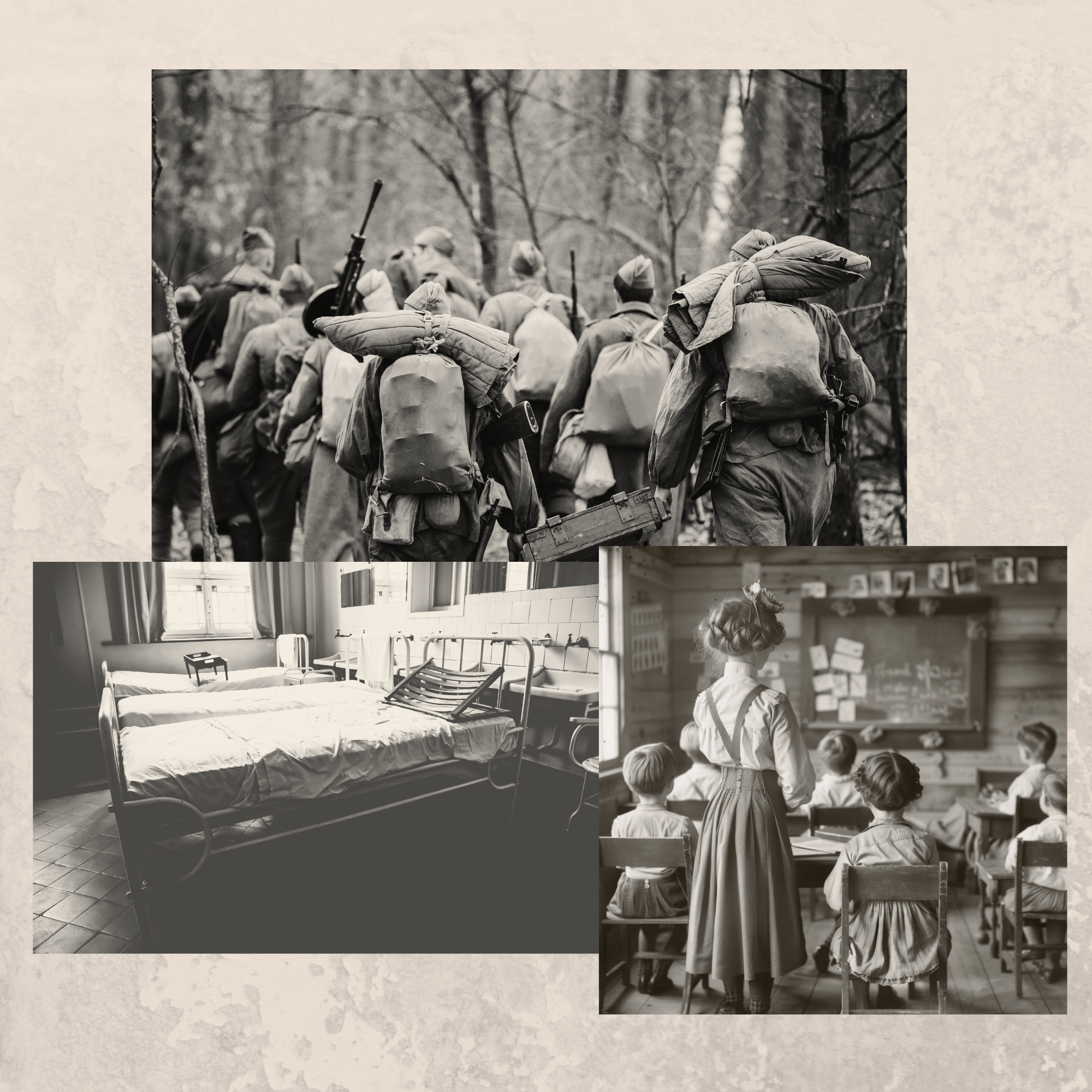
You may be asking yourself “why sailors?” First, sailors commonly faced illnesses like scurvy, seasickness and even a yellow fever epidemic and needed predictable access to treatment from these common illnesses. Secondly, the United States was involved in a “Quasi-War” (Rust, 2023) with France that saw Congress reconstitute the United States Navy in March of 1798 and approve the use of force against French warships in July of 1798. With both countries fighting each other at sea, there would presumably be more injuries to sailors and thus more treatment needed for those injured sailors.